



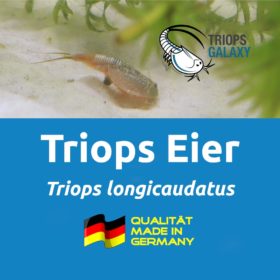
 Triops Longicaudatus
 Triops Longicaudatus Red
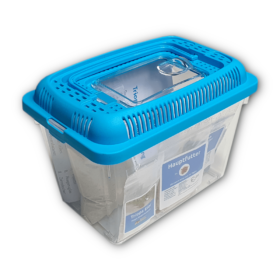 Triops Longicaudatus
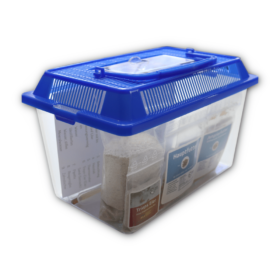 Triops Longicaudatus Red
 Triops food
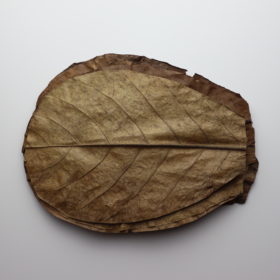 Sea almond leaf
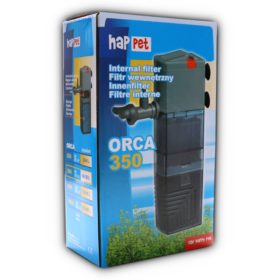 Aquarium filter
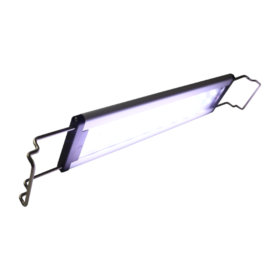 Lighting
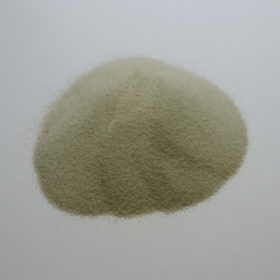 Substrate
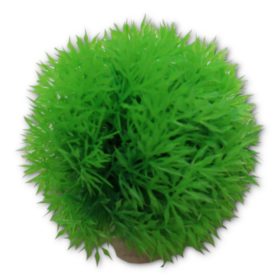 Decoration
 Heating
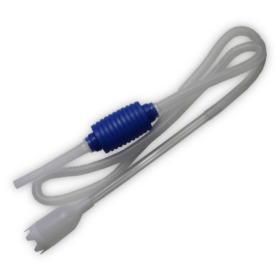 Cleaning
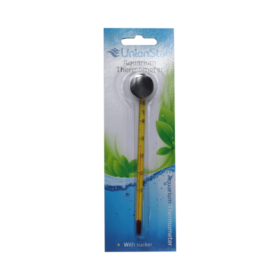 Thermometer
Guide
Breeding triops: Do you know what I discovered after years of breeding?
How can you breed triops? You may have heard that these fascinating prehistoric crustaceans have lived on Earth virtually unchanged for millions of years – and now you can even breed them at home. Sounds complicated? It’s not! Basically, all you need to breed triops is a few utensils, a little patience and an interest in aquatics. After just one day, you’ll be able to see the tiny nauplii swimming around your tank – an experience that never fails to delight. In this blog article, I’ll show you step by step what you need to bear in mind if you want to breed triops: from setting up the tank and feeding them for the first time to exciting details such as moulting and possible diseases. If you want to delve deeper, you’ll find lots more expert tips and detailed instructions about these unique animals here on the Triops Galaxy blog.
Breeding triops: What are triops?
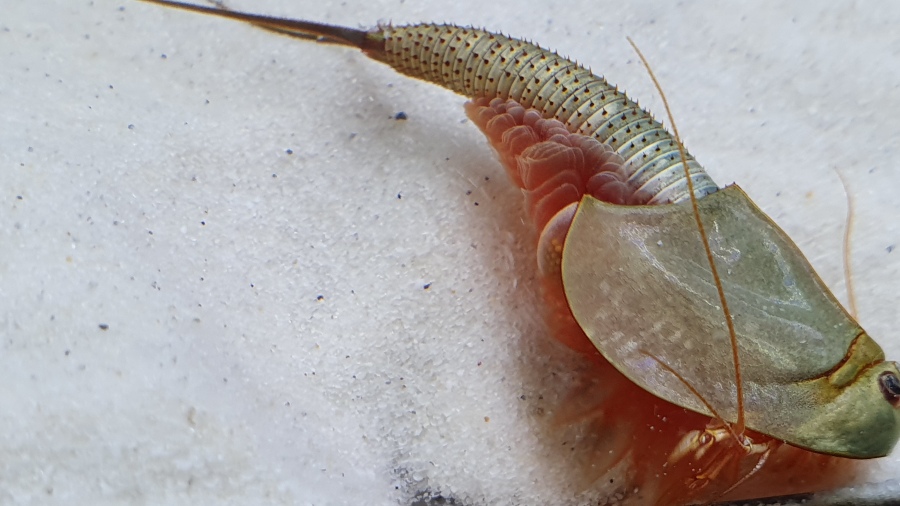
More than 200 million years ago, dinosaurs ruled our planet. But their era came to an end with the massive mass extinction at the boundary between the Cretaceous and Palaeogene periods. Triops fared differently: these amazingly resilient prehistoric crustaceans not only survived the catastrophe, but still exist today and can even be bred in domestic aquariums. You too can easily start breeding triops. Their name comes from Greek and means ‘three-eyed’, referring to the characteristic additional middle eye that evolution has given them.
Biologically, triops belong to the class Branchiopoda and, within the order Notostraca, to the family Triopsidae. This comprises only two genera: Triops and Lepidurus. Triops cancriformis is particularly well known and is considered the oldest living animal species. Fossil finds from the Franconian Keuper prove that their subspecies Triops cancriformis minor already existed over 200 million years ago. Today, you can breed Triops at home and enjoy this primeval species.
The gender ratio is striking: females clearly outnumber males in the populations, with males accounting for only about ten percent. Another interesting behaviour is cannibalism, which is particularly pronounced in the American species Triops longicaudatus. Anyone who wants to breed triops should take this into account. A balanced, protein-rich diet – such as worms – can help prevent cannibalism. The animals have a relatively short lifespan, usually only four to twelve weeks. This short lifespan should be taken into account when breeding primeval crabs.
Like shrimp and crayfish, triops have a hard outer skeleton. This exoskeleton protects the body while still allowing for amazing mobility. Since it does not grow with them, triops must moult regularly. Their natural habitats are short-lived pools and puddles that form after rainfall or flooding, often on loamy ground. However, agricultural use and increasing development are causing many of these biotopes to disappear. As a result, triops are now considered highly endangered in the wild.
Breeding triops: Why should you breed prehistoric crustaceans?
There are many reasons why people breed triops or keep other aquarium inhabitants. For some, breeding triops is a source of pure fascination, while others want to offer their children an exciting experience of nature or bring a piece of Earth’s history into their living room. As representatives of the branchiopods, triops impress not only with their primitive appearance, but also with their amazing ability to thrive even in extreme habitats.
Triops are among the oldest known creatures on our planet. You can breed these prehistoric crustaceans at home. They populated the Earth over 200 million years ago – long before the dinosaurs disappeared. While the mass extinction at the Cretaceous–Paleogene boundary wiped out most species, triops survived to this day virtually unchanged. They are therefore considered ‘living fossils’ – true witnesses to a world long gone.
Breeding such a primeval crustacean in your home aquarium is like taking a look back 10,000 years into Earth’s history, before the beginning of the Holocene epoch. Isn’t that fascinating?
You could almost say that breeding triops is like keeping a small dinosaur at home. But triops are not just relics of the past – they are also true pioneers of research. Their eggs have already been taken to the International Space Station (ISS), making triops one of the few animal species to have ever travelled into space. You can even breed your own triops at home now.
Triops breeding is particularly exciting for children: they can experience first-hand how tiny eggs hatch into small crustaceans, grow, moult and live their short but exciting lives. Since triops only live for about three months, they do not form such a close bond as traditional pets – once their life cycle is over, you can simply start breeding a new batch. You can start breeding again and again and breed prehistoric crabs.
Another important aspect is species protection. Triops are now highly endangered in the wild. Their natural habitats are increasingly disappearing due to agriculture, land sealing and climate change. A study conducted by the Bavarian State Office for the Environment in 2014 shows how critical the situation is: there are only around 630 known habitats left in Germany and Austria – an alarmingly low number.
Therefore, breeding Triops at home can help raise awareness of these fascinating prehistoric crustaceans and ensure their continued existence in human care. However, if you wish to breed Triops, please note that you must not remove them from the wild or release them back into the environment without proper control. They should be kept responsibly so that these amazing creatures can be preserved for the future.
Breeding primeval crustaceans: Things to consider when buying triops eggs
Would you like to breed triops but don’t know where to buy triops eggs and breeding kits? At Triops Galaxy, of course. 😉
In principle, you can purchase the triops eggs you need for breeding from many breeders. However, for beginners in particular, this often means that they have to try out several suppliers before they are truly satisfied. I also experienced many false starts in my early days as a breeder. I spent over £80 on various breeding kits, water treatment and accessories – and still none of the eggs hatched. Pure frustration!
Many amateur biologists share this experience. Anyone who has tried breeding triops using a typical experiment kit knows that the hatching rate is often very low. There is a simple reason for this: many of the eggs sold in shops come from large breeding farms abroad. There, they are not only stored incorrectly, but also dried too early. Combined with inaccurate instructions, this almost inevitably leads to nothing hatching. You should bear this in mind if you want to breed brine shrimp.
What distinguishes good Triops eggs from bad ones?
After several years of breeding triops, I have learned that the decisive factor lies in the breeding process. After laying, the eggs need at least two weeks to develop fully. Only then can they be dried and exposed to a winter simulation. Large farms often lack the time for this, resulting in eggs that are unable to hatch. You should take this into account if you want to breed triops.
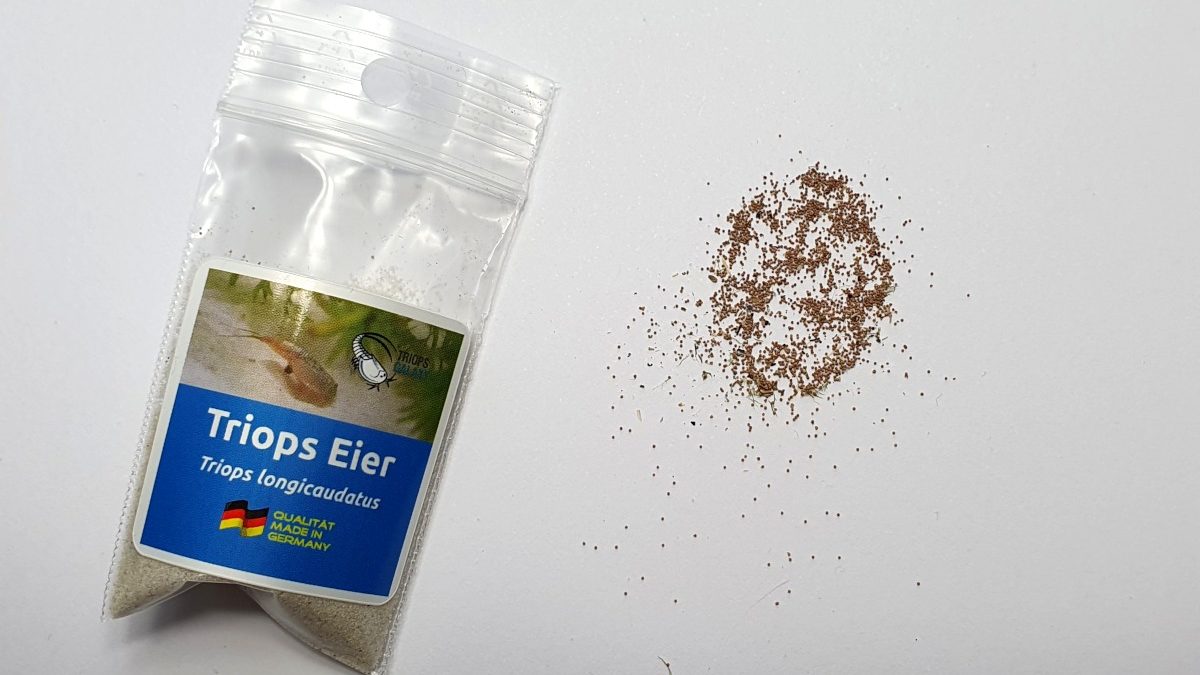
In addition, the eggs are often mixed with so-called ‘dead sand’. This sand has never been part of an aquarium and contains no microorganisms or nutrients that the sensitive nauplii urgently need in the first few days. If you want to breed triops, you should use high-quality breeding kits.
I always leave the eggs in water for at least two weeks until they are fully developed. During breeding, I use high-quality branded feed, live food such as worms, and plant-based food such as fruit or vegetables. This balanced diet ensures that the nauplii grow strong and that the hatching rate is significantly higher than for mass-bred triops. This is the only way to significantly increase the chances of your Triops breeding being a success.
What do I need to breed triops?
Would you like to breed triops and are wondering what you need to do so? When you are just starting out with triops breeding, it is understandable that you do not want to invest too much money and would like to try it out with as little effort as possible to see how keeping these fascinating prehistoric crustaceans works. The good news is that getting started does not require a large investment, as you can breed prehistoric crustaceans with just a few basic items.
This includes a transparent container, water, suitable lighting, a heating rod, a thermometer and, of course, the triops eggs, which are usually sold in the form of an egg-sand mixture. With this basic equipment, you are well prepared and ready to breed your first triops.
In addition, there are a few tools that can make caring for and feeding your fish much easier. Using a pipette, you can take water from the tank and put it into a small test tube, into which you have previously added a tiny amount of spirulina powder using a toothpick. This mixture is then carefully returned to the breeding tank and serves as food for the nauplii in the first four days after the second morning of their hatching.
A small syringe is suitable for cleaning the tank, while sea almond leaves can also improve and stabilise the water in a natural way. With this manageable set of tools, you can easily breed triops.
Below, I explain the most important utensils:
Breeding tank
If you want to breed triops, you should have a breeding tank with a maximum volume of five litres. The triops can hatch and spend their first two weeks of life in this small tank. An aquarium that is too large is unsuitable for the initial phase, as the tiny young animals would have difficulty finding food and could quickly die. It is therefore advisable to use a smaller tank for breeding at the beginning.
Water
To achieve the best results when breeding triops, it is best to use river, stream, lake or rainwater. A mixture of 70 per cent distilled water and 30 per cent still water is also recommended. Tap water should be avoided, as it often contains chlorine.
Light
If you want to breed triops or prehistoric crustaceans in general, the right lighting plays a crucial role. Without sufficient light, the animals cannot hatch, as it triggers the necessary stimulus for hatching. At the same time, the light source can give off a certain amount of heat, but should never replace the heating rod in winter. If you switch off the LED lamp, the water cools down quickly, meaning that the optimum temperature can no longer be maintained. In the worst case, this can lead to the death of the sensitive nauplii.
Heating rod
Heating the breeding tank is particularly necessary from late autumn onwards when temperatures drop, as well as during the winter months if you want to breed triops. During the warm summer months, however, no additional heat source is usually required. While a normal room temperature of around 19 °C is often sufficient for the species Triops longicaudatus – even in winter – other species require significantly higher temperatures. In these cases, the use of a heating rod is essential to create optimal conditions for Triops breeding.
Triops eggs
The quality of the triops eggs is crucial if you want to breed triops. At Triops Galaxy, you can obtain high-quality Triops eggs that have been produced using a specially developed process. This involves laying eggs in the sand for at least two generations of Triops and additional enrichment with counted pure eggs. This guarantees 100% that Triops Galaxy kits contain more than the specified number of eggs.
Thermometer
You can use a thermometer to determine the water temperature, although many heating rods have a temperature display, so you don’t need to buy a thermometer separately.
Sea almond leaves
If you want to breed triops, you should definitely use sea almond leaves. These leaves have been very popular in aquatics for many years because they improve the water in a natural way. Their disinfecting and antifungal properties inhibit pathogens and keep the water quality stable – a crucial factor if you want to breed triops successfully.
My triops are not hatching: what is the reason for this?
Under optimal conditions, the first triops appear after about 24 hours, sometimes even after only 13 hours, as is often the case with Triops Galaxy. Nevertheless, it is not uncommon for no hatching to occur even after a week. For many breeders, this is initially disappointing, and quite a few lose motivation at this point. However, patience is one of the most important factors in triops breeding, as it can take up to two weeks for the first tiny nauplii to become visible in the breeding tank.
You wanted to breed triops, but nothing hatched? From my own experience, I know that temperature plays a crucial role: in heated tanks, the animals usually hatch much faster than in unheated ones. Even if you use high-quality, locally bred breeding stock and carefully observe all conditions, the eggs may still fail to hatch. I will explain why this happens and what the possible causes are below.
1. Nature conservation
Nature is far more resourceful than we often assume. In the wild, triops are found in temporary pools and puddles formed by seasonal rainfall or flooding. Before these bodies of water dry up again, the females lay their so-called persistent eggs. You can also breed triops at home. These tiny capsules of life are true masterpieces of evolution: they can survive extreme heat, freezing cold, years of drought and even strong UV radiation – often for decades.
Only when conditions are favourable and the eggs come into contact with water is the hatching stimulus triggered and development begins. Interestingly, not every egg immediately hatches into a nauplius. On average, only about one in four eggs produces a nauplius, while the remaining eggs remain dormant and are only activated after many years or even decades. It is precisely this phenomenon that represents an ingenious survival strategy: if all the eggs hatched at the same time, the populations would quickly be wiped out after the ponds dried up.
However, through delayed activation, nature ensures that new generations continue to emerge – even when environmental conditions remain unfavourable for long periods of time. This ingenious strategy is the key to why triops have existed for over 200 million years and are still among the oldest animal species living on Earth today. If you want to breed triops yourself, remember to preserve the species in nature.
2. Water
If you want to breed triops, you should use the right water. One of the most common reasons why triops do not hatch is because the wrong water is used. Tap water in particular can be problematic, as it is too hard in most regions and also contains chlorine or other chemical additives. However, numerous breeding experiments have shown that natural water from rivers, lakes or streams is ideal. It contains important minerals, nutrients and microorganisms that support the hatching and development of nauplii.
Those who do not have access to such natural water sources can just as easily use rainwater, which has also proven to be effective. Another option is a mixture of distilled water and still mineral water. A ratio of approximately 70 per cent distilled water to 30 per cent mineral water has proven to be particularly effective in triops breeding, ensuring stable conditions and high hatching rates. If you want to breed triops, you should not neglect the water.
3. Light
In their natural environment, triops find ideal light conditions that are crucial for their life cycle. When breeding them at home, it is therefore the breeder’s job to provide suitable lighting. It is particularly important to understand that triops cannot hatch without light, as light triggers the decisive impulse for hatching. You should bear this in mind if you want to breed triops. Modern LED aquarium lamps are particularly well suited for breeding in aquariums.
Not only do they provide the necessary brightness, but they also usually have different modes that simulate day and night phases. While night mode mimics soft moonlight, the lighting should be switched on for at least twelve hours during the day to create optimal conditions. The American species Triops longicaudatus has even been shown to benefit from two additional hours of light, which supports their development and can increase the hatching rate.
4. Water temperature
If you want to breed triops, you need to pay particular attention to the water temperature. If it is not right, the eggs may not hatch at all or the sensitive nauplii may die in the first few days of life. While no additional heating rod is necessary during the warm summer months, constant heating is almost unavoidable during the cooler winter months in order to ensure stable conditions in the aquarium.
To help you get your bearings, here is an overview of the ideal temperature ranges for the most commonly bred Triops species.
| Triops Cancriformis | 20 – 24 °C |
| Triops Longicaudatus | 23 – 26 °C |
| Triops Longicaudatus Red | 23 – 26 °C |
| Triops Beni kabuto ebi Albino | 22 – 25 °C |
| Triops Granarius | 24 – 26 °C |
| Triops Newberryi | 27 – 31 °C |
| Triops Australiensis | 27 – 31 °C |
Triops breeding: step-by-step guide
With these comprehensive Triops breeding instructions, you will be able to breed prehistoric crustaceans and follow their development from egg to adult. Let’s get started!
- First, clean the breeding tank thoroughly using only water. Do not use cleaning agents to avoid leaving any residue. All other breeding equipment should also be cleaned using only water.
- Fill the breeding tank with water from a river, lake or stream, or with a mixture of 70 per cent distilled water and 30 per cent still mineral water. Alternatively, you can also use rainwater if you want to breed triops.
- Place an LED lamp above the breeding tank.
- Add a few small pieces of a sea almond leaf to the water.
- Carefully pour the egg and sand mixture into the water and make sure that the triops eggs do not stick to the edge of the tank. Push them into the middle with a toothpick.
- The first nauplii hatch after approximately 24 to 72 hours, but it can also take up to two weeks.
- Two days after hatching or after 48 hours, you can feed the nauplii for the first time. A toothpick tip of spirulina powder is perfectly sufficient. The nauplii should be fed twice a day. It is important that they are not overfed.
- Once your triops have reached a size of one centimetre, you can move them to a larger aquarium.
- After feeding the nauplii spirulina powder for four days, feed the triops decapsulated brine shrimp eggs for the next ten days.
- After ten days of feeding with the transitional food, your triops will be ready for their main food. One small pellet per animal per day is sufficient.
Now you have everything you need to breed Triops.
Breeding triops – Conclusion
Breeding triops is not only a fascinating hobby, but also an educational experience. Anyone who spends time with these ‘living fossils’ will discover a piece of Earth’s history in their own living room. With the right equipment, clean water, suitable lighting and a little patience, you can achieve amazing results. It is particularly exciting to watch tiny nauplii develop into small prehistoric crustaceans within a few days, which grow rapidly and lead an active life in the aquarium.
Ultimately, this hobby combines science, nature observation and the joy of aquatics – offering both beginners and experienced breeders new insights and unforgettable moments time and time again.

- Scanning instead of wasting paper: How Triops Galaxy focuses on sustainability ♻️ - 12. December 2025
- More than 20,000 sea urchins for science - 9. December 2025
- Unlucky creature of the Cretaceous period: prehistoric sparrow suffocated under 800 stones - 7. December 2025
