



 Triops Longicaudatus
 Triops Longicaudatus Red
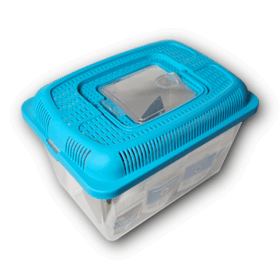 Triops Longicaudatus
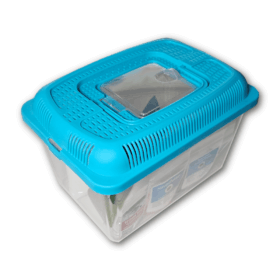 Triops Longicaudatus Red
 Triops food
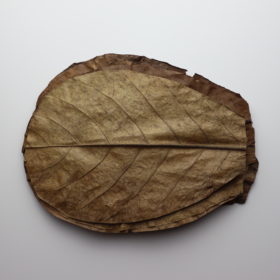 Sea almond leaf
 Aquarium filter
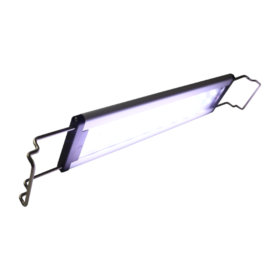 Lighting
 Substrate
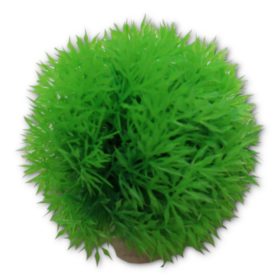 Decoration
 Heating
 Cleaning
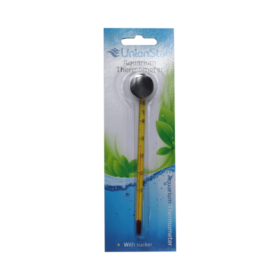 Thermometer
News
Dinosaur strangulation marks lead to spectacular discovery
What sounds like a bizarre discovery today has turned out to be a scientific stroke of luck for palaeontology: fossilised vomit from a predatory dinosaur has revealed a previously unknown pterosaur to researchers and at the same time provides insights into the feeding habits of these prehistoric giants.
A research team led by Aline Ghilardi from the Universidade Federal do Rio Grande do Norte in Natal, Brazil, discovered bone fragments in a so-called regurgitalith, a fossilised vomit from a dinosaur’s digestive tract, which could not be attributed to any known species. Among the remains of the digested meal, fish fossils were found alongside the remains of a newly described pterosaur, which was given the name Bakiribu waridza.
A pterosaur with a ‘beard crest’ in its beak
What is sensational is not only the extraordinary context of the discovery, namely the “fossilised vomit”, but also the characteristics of the animal itself. Bakiribu waridza used a fine barb comb in its beak to filter small organisms from the water, similar to flamingos. This makes it the first filter-feeding pterosaur discovered in Brazil.
The name ‘Bakiribu’ comes from the language of the indigenous Kariri people and means ‘comb mouth’, referring to the characteristic morphology of its beak. This pterosaur probably fed on small crustaceans and tiny aquatic organisms that adhered to its baleen. The combination of its anatomical features suggests that Bakiribu waridza represents a possible intermediate stage in the evolution between older filter-feeding species discovered in Germany and more recent discoveries in Argentina.
A carnivorous dinosaur choked to death and went down in scientific history
The bones, which had been broken down by bacteria and then finally spat out, revealed a clear story to the researchers: the unknown predatory dinosaur, probably a spinosaurid, first devoured the pterosaur, then four fish. But the pterosaur’s bones apparently caused it some difficulty. They were cracked, but barely crushed, indicating that the animal was unable to digest them completely. Eventually, the sharp-edged remains triggered a gag reflex that brought up the entire mixture.
Spinosaurs are known for their semi-aquatic lifestyle. They hunted in the water and on the shores, where many pterosaurs also sought their food. This discovery therefore fits perfectly into the ecological context: a predatory encounter at the water’s edge, followed by a failed feast, which becomes a scientific sensation 110 million years later.
A find like winning the lottery
Regurgitaliths are among the rarest fossils. The fact that they also contain bones from a previously unknown species is almost unprecedented. For palaeontology, this discovery means not only the description of a new species, but also a rare insight into the food chains of the Cretaceous period – and a direct indication of the proximity between pterosaurs and predatory dinosaurs in their respective habitats.
Bakiribu waridza thus not only broadens the picture of pterosaur diversity, but also shows how an unexpected discovery site, the stomach contents of another animal, can open a window onto evolution.

- Palaeontology: Horned dinosaurs were there, but misidentified - 9. January 2026
- High tech for a prehistoric animal: new tusks for the Darmstadt mastodon - 8. January 2026
- All the best for the new year 2026! ☃️ 🎉 - 30. December 2025
