



 Triops Longicaudatus
 Triops Longicaudatus Red
 Triops Longicaudatus
 Triops Longicaudatus Red
 Triops food
 Sea almond leaf
 Aquarium filter
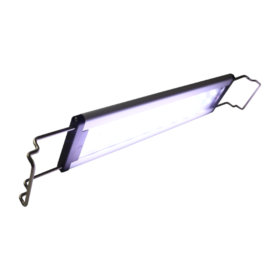 Lighting
 Substrate
 Decoration
 Heating
 Cleaning
 Thermometer
News
Palaeontology: Horned dinosaurs were there, but misidentified
New study forces palaeontology to rethink
For a long time, Europe was considered a blind spot on the map of horned dinosaurs during the late Cretaceous period. While horned dinosaurs of the Ceratopsia group were found in great diversity in North America and Asia, the continent appeared to be almost devoid of them around 80 million years ago. A new study now fundamentally challenges this view and concludes: the animals were not missing, they were simply misclassified.
The Ceratopsia, which include the famous Triceratops, were successful herbivores with distinctive horns and neck shields. Given the continental location at the time, when Europe consisted of numerous islands and land bridges temporarily enabled migration, it seemed unlikely that these dinosaurs would not have been found here of all places. Nevertheless, for decades there were only a few, controversial fossil finds.
An international team of researchers from the United Kingdom and Hungary has now provided a decisive clue. In the journal Nature, the scientists report on new investigations of fossils of the dinosaur Ajkaceratops kozmai. The species had already been described in 2010, but its exact systematic classification remained unclear for a long time. Some experts considered it a horned dinosaur, while others suspected a relationship to hornless herbivores such as Iguanodon. The reason for this was the poor state of preservation of the skull remains known to date.
The find from Hungary that has now been analysed changed the situation. It is a much better preserved skull, which has been examined in detail using modern CT and 3D scans. This revealed characteristic features: a sharp, hook-shaped beak and a domed palate – both typical characteristics of ceratopsian dinosaurs, which are mainly known from Asia. The researchers date the animal to around 84 million years old and clearly classify it as a horned dinosaur, as confirmed by the Natural History Museum in London.
But the study goes further. The new analyses suggest that other European fossils have also been misinterpreted to date. One example is a find from Romania that had been assigned to various dinosaur groups over the years. The team has now also identified it as a ceratopsian and given it the new name ‘Ferenceratops’.
This has far-reaching consequences for research. ‘We can now confirm that horned dinosaurs were widespread in Europe during the Cretaceous period,’ says study author Richard Butler from the University of Birmingham. At the same time, the discovery forces us to reassess the ecosystems of that time. According to this, Europe was not a peripheral area of the dinosaur world, but part of a dynamic, species-rich habitat whose diversity is only gradually becoming apparent.
The supposed absence of horned dinosaurs thus turns out to be an error in scientific history and a reminder of how much new methods and fresh perspectives can shed new light even on old fossils.

- Palaeontology: Horned dinosaurs were there, but misidentified - 9. January 2026
- High tech for a prehistoric animal: new tusks for the Darmstadt mastodon - 8. January 2026
- All the best for the new year 2026! ☃️ 🎉 - 30. December 2025
