



 Triops Longicaudatus
 Triops Longicaudatus Red
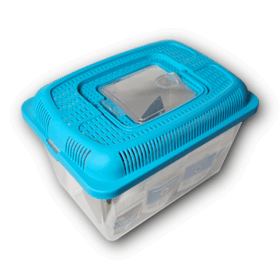 Triops Longicaudatus
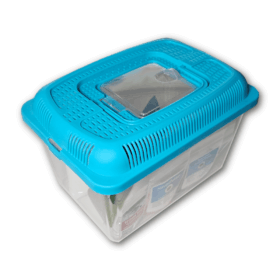 Triops Longicaudatus Red
 Triops food
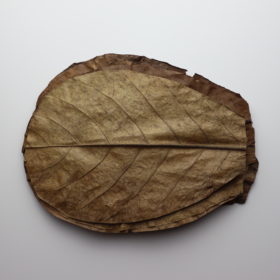 Sea almond leaf
 Aquarium filter
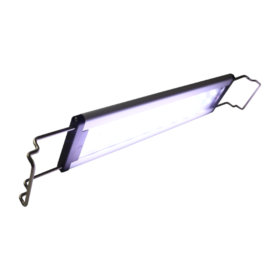 Lighting
 Substrate
 Decoration
 Heating
 Cleaning
 Thermometer
News
High tech for a prehistoric animal: new tusks for the Darmstadt mastodon
Darmstadt: There is a concentrated silence in the entrance area of the Earth and Life History Department at the Darmstadt State Museum. Taxidermist David Kuhlmann and restorer Mascha Siemund are working with millimetre precision on what is probably the museum’s most famous exhibit: the Darmstadt mastodon. The prehistoric giant animal is getting new tusks, made not from ivory or wood, but in a 3D printer.
The replacement was necessary because the previous replicas were showing cracks at the base. For museum curator Oliver Sandrock, the move is logical: ‘The new tusks are state-of-the-art.’ Made from a special plastic, each replica weighs just four kilograms. The digital template was based on original mammoth tusks from the USA, whose shape and dimensions were precisely transferred to the Darmstadt skeleton.
The ‘dental treatment’ takes place on site. First, the restorers remove old foam residues from the skull openings. Then the new tusks are loosely inserted, aligned on a support and finally fixed with a two-component foam. Transitions are smoothed out, and after drying, the colour is adjusted. The result should blend harmoniously into the overall picture – technically precise, visually unobtrusive.
A fossil with world history
Although the mastodon has been at home in Darmstadt since 1854, its origins lie across the Atlantic. The American painter and museum founder Charles Willson Peale had the bones excavated in New York State in 1801 and captured the spectacular find in a painting. The assembled skeleton made history: it was the first fossil of its kind to be displayed upright in the USA and only the second worldwide.
Among its prominent admirers were naturalist Alexander von Humboldt and then US President Thomas Jefferson, who sponsored the exhibition at the Philadelphia Museum. Via London, the mastodon finally arrived in Darmstadt, where Johann Jakob Kaup acquired it for the Grand Ducal Museum.
The fossil has not stood still since then. In 2020, it was shipped to the Smithsonian American Art Museum in Washington for a Humboldt exhibition. Its return was delayed due to the pandemic; it was not until early 2022 that the mastodon was back in Darmstadt. Shortly afterwards, the museum dedicated the special exhibition ‘American Heiner – A Mammoth Makes History’ to it.
Original and reconstruction
As monumental as the exhibit appears, it is not entirely original. Around half of the bones actually date back to the Ice Age. The rest is an artful mix of historical additions and modern reconstructions. Particularly noteworthy: one of the rear thigh bones is made of carved cherry wood, a piece of craftsmanship from the 19th century that blends in seamlessly.
The new tusks also follow this principle of restraint. Instead of ivory white, a medium brown tone was chosen. ‘Tusks can take on very different colours depending on the embedding environment,’ explains Sandrock. Light, dark or almost black, anything is possible.
In the end, the curator is satisfied. The new teeth look harmonious, modern and at the same time respectful of the fossil’s history. A piece of prehistory, supported by the latest technology – and ready for the next generations of museum visitors.

- Palaeontology: Horned dinosaurs were there, but misidentified - 9. January 2026
- High tech for a prehistoric animal: new tusks for the Darmstadt mastodon - 8. January 2026
- All the best for the new year 2026! ☃️ 🎉 - 30. December 2025
