


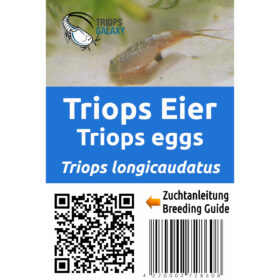
 Triops Longicaudatus
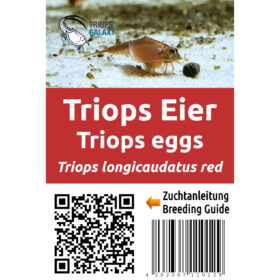 Triops Longicaudatus Red
 Triops Longicaudatus
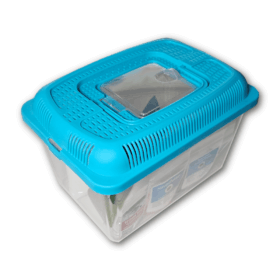 Triops Longicaudatus Red
 Triops food
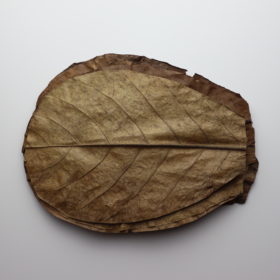 Sea almond leaf
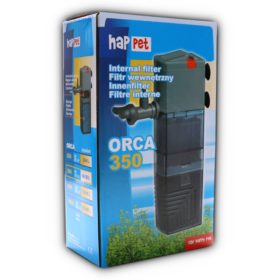 Aquarium filter
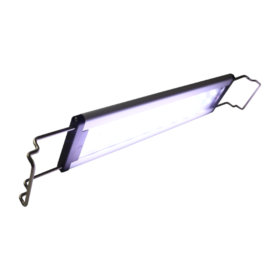 Lighting
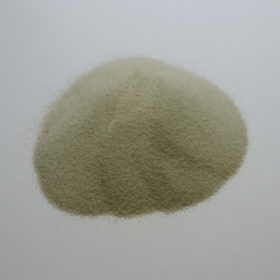 Substrate
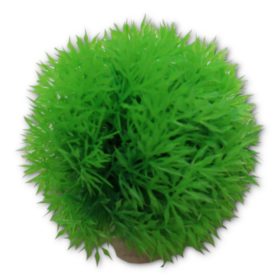 Decoration
 Heating
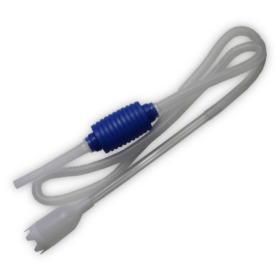 Cleaning
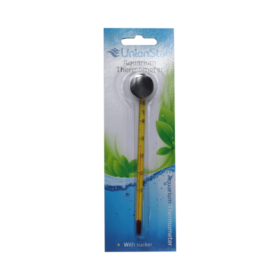 Thermometer
Greece is not only known for its ancient temples, olive groves and beautiful coastlines; aquatics are also becoming increasingly popular here. While aquariums have been a fixture of home décor in Northern Europe for decades, aquatics have only been discovered in Greece in recent years. The hobby is still in an exciting phase of development. While aquariums have long been part of home décor in Germany and the Netherlands, Greece is currently experiencing a real boom – with its own ideas, climatic challenges and Mediterranean charm. Between the Mediterranean Sea, olive groves and ancient cities, more and more Greeks are discovering the fascination of the underwater world in their own homes. In this blog article, we dive into aquatics in Greece.
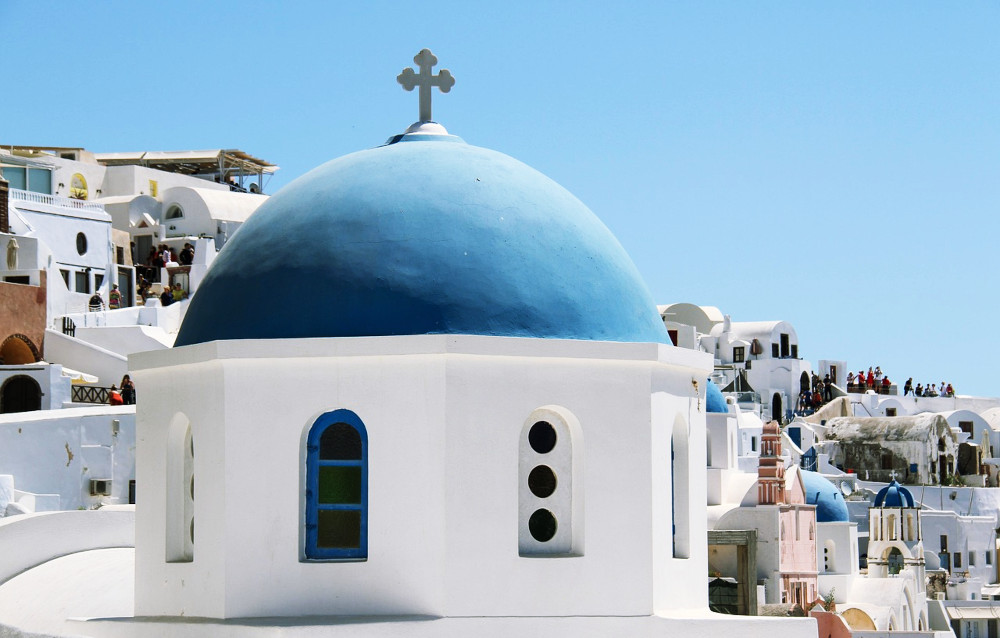
Aquaristics in Greece: Mediterranean climate, special challenges
The Mediterranean climate, with hot summers and mild winters, poses unique challenges for aquatics in Greece. During the summer months, room temperatures can quickly rise above 30 °C, which is too much for many tropical fish species. Therefore, cooling systems, fans or air-conditioned rooms are often essential for keeping aquariums.
In winter, on the other hand, temperature fluctuations in older buildings mean that heating rods are in constant use. Robust species that can tolerate slight temperature fluctuations, such as guppies, platies or antenna catfish, are therefore particularly popular.
Popular fish and aquarium species in Greece
Greek aquarists often favour tropical freshwater aquariums, but saltwater aquariums are also becoming increasingly popular. This is hardly surprising in a country surrounded by the sea. Particularly popular are:
- Cichlids from Africa, due to their colourfulness and robustness
- Livebearing toothcarps such as guppies and mollies
- Nano aquariums with shrimp or small snails
- Reef aquariums with anemones, clownfish and soft corals
Many aquarium enthusiasts in Greece also experiment with aquascaping, i.e. the artistic design of underwater landscapes. Mediterranean stones, olive wood or volcanic substrates from the Aegean islands are used for this purpose – natural materials that perfectly reflect the local flair. That’s how exciting aquatics are in Greece.
Aquarium shops and scene
Some aquarium enthusiasts even try to bring a piece of the Mediterranean home with fish and invertebrates from the Aegean Sea. However, this practice is strictly regulated. Collecting marine animals from the wild is only permitted with special permits, and many species are protected. Nevertheless, there are specialised breeders who operate Mediterranean aquariums with legally bred species, such as seahorses, anemones and blennies.
In cities such as Athens, Thessaloniki and Heraklion, you can now find modern specialist aquatics shops with an international range of products. Many retailers import their animals and products from Germany, the Netherlands or Czechia. Online shops are also gaining in importance, especially on the islands, where access to brick-and-mortar shops is limited.
The Greek aquatics community is also growing steadily on social media, and aquatics in Greece is becoming increasingly popular. Facebook groups and forums exchange information about breeding, technology and water chemistry. Discussions about DIY projects for building your own filters, lamps or aquarium furniture are particularly popular – a creative and cost-effective solution in a country where imported accessories are often expensive.
As in the rest of Europe, sustainability is becoming an increasingly important issue in Greece. Many aquarium owners are turning to energy-saving LED lighting, environmentally friendly filter technology and breeding rather than wild capture. The breeding of native and tropical species, from fighting fish to Triops longicaudatus, is becoming particularly popular.
Below, we take a look at some of the aquariums in the country.
The CRETAquarium: Greece’s gateway to the underwater world
The CRETAquarium opened its doors in 2005 and is part of the Hellenic Centre for Marine Research (HCMR). Its aim is to bring to life the fascinating diversity of the Mediterranean, from tiny jellyfish to imposing sharks.
The building itself is an attraction: located in the former military complex of Gournes, the aquarium has been designed in a modern and naturalistic style. The tours take visitors through light-flooded rooms, past realistically designed marine landscapes with rocks, sandy bottoms and sea grass meadows.
Soft lighting, the soothing movements of the fish and the gentle sound of the water create an almost meditative atmosphere. A place where you can experience the sea with all your senses. The CRETAquarium is a real asset to aquatics in Greece.
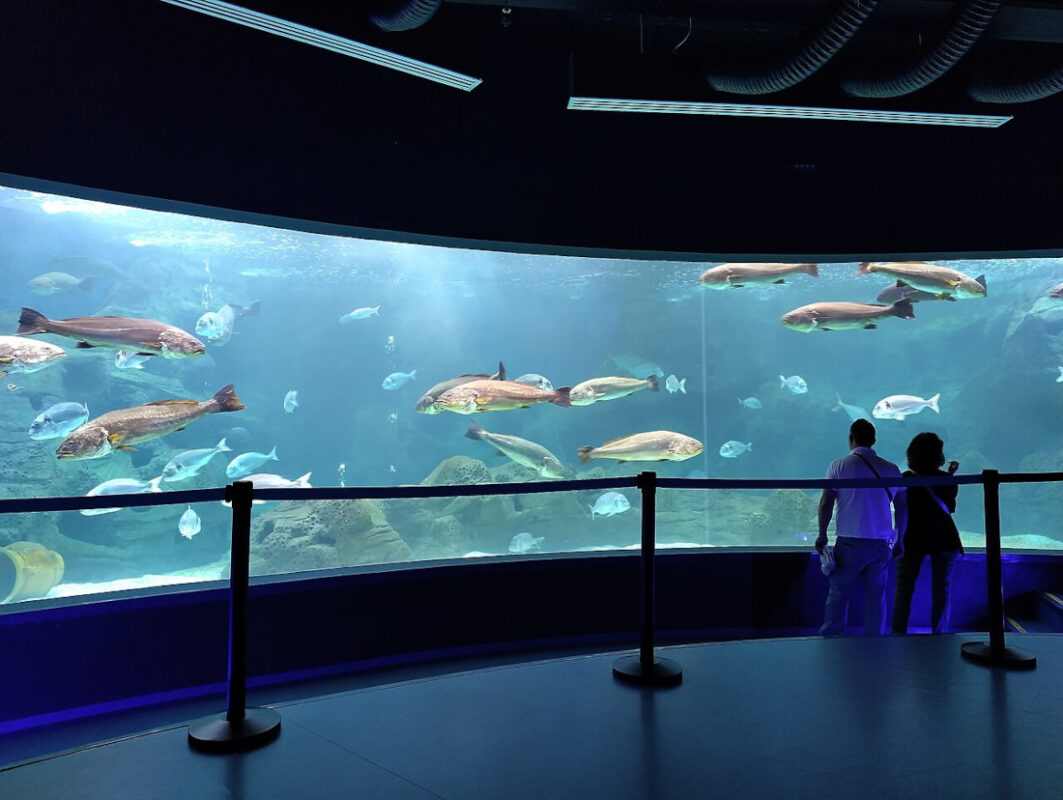
More than 2,000 marine animals from around 200 different species cavort in over 60 tanks covering an exhibition area of more than 5,000 square metres. Visitors can experience the Mediterranean in all its facets here: from shallow coastal waters to mysterious caves and the dark depths of the Aegean Sea.
The highlights undoubtedly include the large shark tanks with sand tiger sharks, nurse sharks and stingrays. Behind thick bulletproof glass, the animals glide majestically through the turquoise water.
There are also numerous smaller tanks that showcase life on Greece’s rocky coastline: colourful anemone fish, Mediterranean starfish, moray eels, octopuses and mullet. Rare species such as seahorses and nudibranchs are also successfully bred here, making an important contribution to species conservation.
The Corfu Aquarium: The hidden underwater world of the Ionian Islands
While Crete is home to one of Europe’s largest marine research centres, the CRETAquarium, the green island of Corfu boasts a small but lovingly run insider tip: the Corfu Aquarium. Located in the picturesque bay of Paleokastritsa, surrounded by turquoise blue water and steep cliffs, this charming aquarium has been delighting visitors from all over the world for years.
The Corfu Aquarium is entirely dedicated to the underwater world of the Ionian Sea. In a small space, it offers a fascinating insight into the wildlife off the coast of Corfu, from colourful fish to crustaceans and sea turtles.
Moray eels, seahorses, octopuses, lobsters, sea urchins and colourful Mediterranean fish can be observed in several large and small tanks. The proximity to the animals is particularly impressive: many aquariums are positioned at eye level, allowing children in particular to experience the marine world up close.
The animal keepers talk passionately about their work and are happy to answer questions. The personal contact and friendly atmosphere make the visit particularly authentic. Families with children especially appreciate the opportunity not only to see marine life, but also to understand it. The aquarium aims to show that marine conservation begins with each individual. This is a concern that fits perfectly with the values of sustainable aquatics in Greece.
Aquarium of Faliraki: Aquaworld Rhodos
Just a few minutes away from the popular holiday resort of Faliraki lies one of the most fascinating destinations for animal and aquarium lovers in Greece: the Faliraki Aquarium, also known as Aquaworld Aquarium & Reptile Rescue Centre.
It is not a traditional display aquarium, but rather a combination of animal rescue centre, educational centre and sustainable exhibition – a place where the protection of marine animals and reptiles is the top priority.
Aquaworld in Faliraki displays an impressive variety of Mediterranean and tropical creatures. Visitors can observe moray eels, sea anemones, lobsters, squids and colourful reef dwellers up close in naturally designed tanks.
The animals are not wild-caught, but mostly come from rescue operations, private donations or accidents in which marine animals were injured. After their recovery, many of them are allowed to return to the sea, while others remain permanently in the aquarium if they would not be able to survive in the wild.
Rhodes Aquarium – Rhodes Hydrobiological Station: Research, history and the fascination of the sea
At the northern tip of the island of Rhodes, where the Aegean Sea and the Mediterranean Sea meet, lies the Aquarium of Rhodes – Hydrobiological Station of Rhodes. It is not only one of the most famous aquariums in Greece, but also an active research institute for marine biology and nature conservation.
With its impressive Art Deco architecture and location right on the coast of Rhodes Town, it is a place where science and aesthetics merge in a unique way. The Rhodes Aquarium enriches aquatics in Greece.
The building was constructed between 1934 and 1936 during the Italian occupation and originally opened as the ‘Reale Istituto di Ricerche Biologiche di Rodi’. Its purpose was to research the marine fauna of the Aegean Sea. The building itself is an architectural gem. The corridors are lined with natural pebble mosaics, the walls are made of light sandstone, and the gentle splashing of the water basins can be heard throughout.
The combination of historical ambience and modern technology creates an atmosphere that delights both children and adults alike.
After the Second World War, Greece took over the institute and continued to run it as the Hydrobiological Station of Rhodes (HSR). Today, it is part of the Hellenic Centre for Marine Research (HCMR) – and thus an important location for marine science in the eastern Mediterranean.
The Athens Aquarium at the XPLORE Entertainment Centre
In the heart of Athens’ Paiania district, not far from the airport, there is a place where science, education and fun come together: the XPLORE Entertainment Centre – and within it, the impressive XPLORE Aquarium.
It is the largest aquarium on the Greek mainland and the most modern of its kind. With interactive learning stations, realistic habitats and over 2,000 sea creatures, it offers a fascinating insight into the world’s oceans – from the local Aegean Sea to tropical coral reefs.
The XPLORE Aquarium is part of the ‘XPLORE Oceans’ theme complex and takes visitors on an immersive journey through various marine ecosystems.
Visitors experience:
- The Mediterranean basin with moray eels, sea grass beds and typical coastal fish of Greece
- Tropical coral reefs with colourful reef dwellers, clownfish and surgeonfish
- Shark tank with blacktip reef sharks and elegant rays
- Interactive stations where children can playfully discover ocean currents, salinity, and the life cycle of marine animals.
The tanks are illuminated with state-of-the-art LED technology and designed to resemble natural habitats, making the aquarium not only aesthetically pleasing but also educationally valuable. The XPLORE Aquarium focuses on combining education and entertainment, known as edutainment. Visitors should not only marvel at the exhibits but also understand how complex and sensitive marine ecosystems are.
The aquarium places particular emphasis on animal welfare and sustainability. All animals come from controlled breeding programmes or rescue programmes; none are caught in the wild. Water treatment is carried out using modern filter systems to save energy and resources.
With this philosophy, the XPLORE Aquarium actively contributes to raising awareness for the protection of the oceans. A cause that fits perfectly with the values of Triops Galaxy.
The Kastoria Aquarium: Greece’s largest freshwater aquarium
The city of Kastoria is located in north-western Greece, nestled between mountains and the lake of the same name. It is known for its picturesque old town, Byzantine architecture and the sparkling Lake Orestiada. This is where you will find the Kastoria Aquarium, the largest freshwater aquarium in Greece and one of the most interesting of its kind in South-Eastern Europe.
The aquarium impressively demonstrates the richness and diversity of Greece’s inland waters, an aspect that is often overshadowed by the sea in Greek aquatics. The aquarium is housed in a modern building on the outskirts of Kastoria. The interior design combines natural materials with subtle lighting, making the tanks appear like small windows into a hidden world.
While many aquariums in Greece are dedicated to the sea, the Kastoria Aquarium focuses entirely on freshwater species. Covering an area of around 450 square metres and featuring 40 naturalistic tanks, it is home to over 1,000 fish from more than 35 species native to Greek rivers, lakes and ponds.
These include, among others:
- Trout (Salmo trutta fario) from the cool mountain rivers
- Carp (Cyprinus carpio) and tench from the lakes of northern Greece
- Eels (Anguilla anguilla) that migrate to the Atlantic Ocean
- Catfish (Silurus aristotelis), an endemic species of Lake Orestiada
- Perch and pike, which shape the ecological balance of the waters
The tanks are decorated with rocks, roots and plants from natural habitats, allowing visitors to experience Greece’s aquatic world as realistically as possible. The aquarium draws its inspiration directly from nearby Lake Orestiada, one of Greece’s oldest and most species-rich inland waters. The lake is home to numerous fish and bird species and plays a central role in the local ecosystem.
Many of the species on display in the aquarium originate from this lake or the rivers of the Macedonia region. This makes the Kastoria Aquarium not only a showcase, but also a living model of regional biodiversity and a landmark of aquatics in Greece.
The Kini Aquarium on Syros
In the west of the Cycladic island of Syros, in the picturesque coastal village of Kini, lies one of the most charming and significant small aquariums in Greece: the Kini Aquarium. Just a few steps from the beach, the aquarium is dedicated entirely to the underwater world of the Aegean Sea and impressively combines science, education and maritime heritage.
Despite its small size, it is a place of great importance: it preserves the marine knowledge and biodiversity of the Greek islands in a form that is accessible to all generations. The Kini Aquarium was opened in 2006 and belongs to the Foundation for Marine Research and Environmental Education of the Municipality of Syros-Hermoupolis. The animals mostly come from the local coastal region around Syros, often from rescue operations or short-term study projects. After observation and care phases, many species are released back into the wild, an example of marine conservation in action.
The Kini Aquarium is all about sustainability. The operators work according to the principle of ‘observe, understand, protect’. Instead of importing exotic animals, they focus exclusively on native species. This shows how exciting the Greek underwater world is and that you don’t have to travel to the tropics to be fascinated.
The facility uses energy-efficient lighting, environmentally friendly filter technologies and is involved in projects to preserve coastal fauna.
Aquaristics in Greece – Conclusion
Aquatics in Greece is undergoing an exciting period of growth. Between the Mediterranean lifestyle, technical innovation and sustainable animal husbandry, a unique scene is emerging that combines traditional Greek values – tranquillity, closeness to nature and aesthetics – with modern aquatics.
Anyone visiting Greece will notice that it is not only the sea that is teeming with life – more and more small underwater worlds are also lighting up living rooms.

- ❗️PPWR: No deliveries to the EU or Switzerland for the time being ❌ - 17. August 2026
- Rare sighting in the north: a beluga whale appears to be swimming in the Flensburg Fjord - 14. April 2026
- Palaeontology: Horned dinosaurs were there, but misidentified - 9. January 2026
