



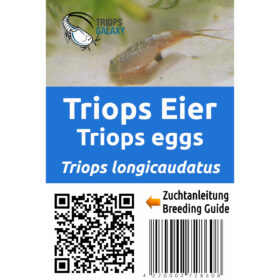
 Triops Longicaudatus
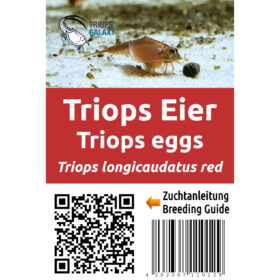 Triops Longicaudatus Red
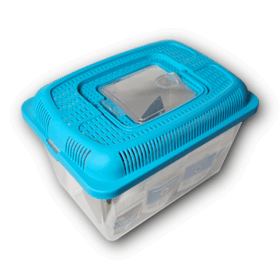 Triops Longicaudatus
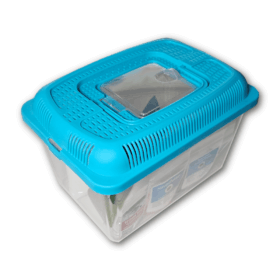 Triops Longicaudatus Red
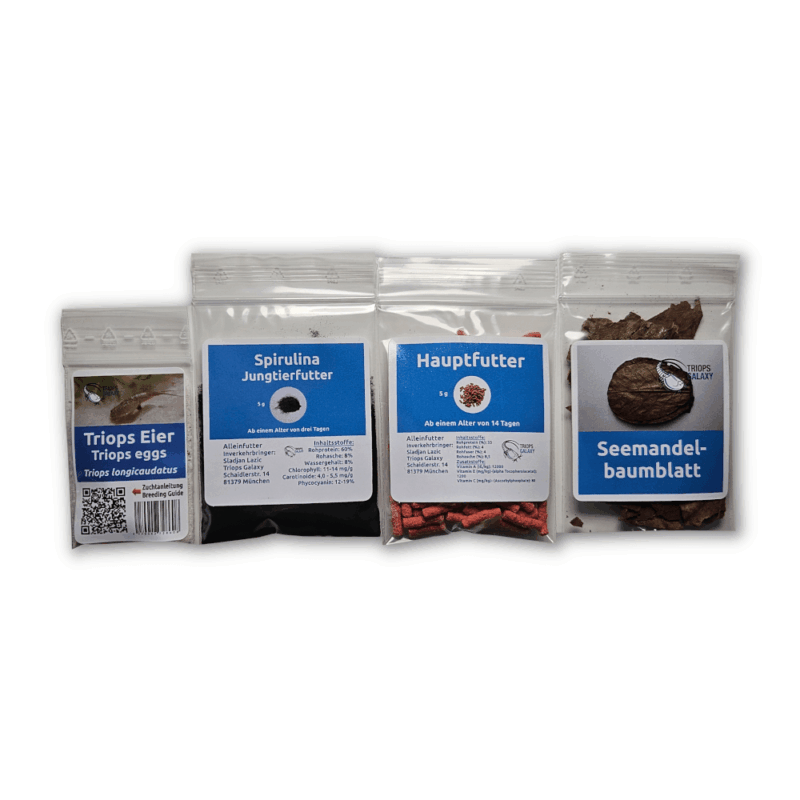
 Triops food
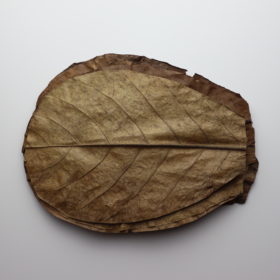 Sea almond leaf
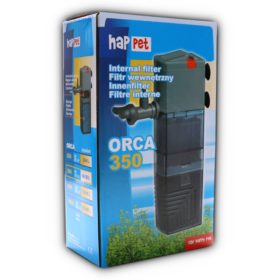 Aquarium filter
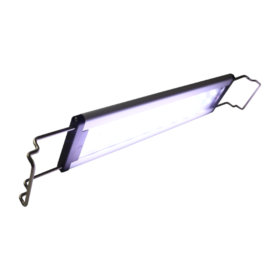 Lighting
 Substrate
 Decoration
 Heating
 Cleaning
 Thermometer
Triops are fascinating prehistoric crustaceans that have remained virtually unchanged for millions of years. Many hobby breeders are familiar with the challenges of breeding them in summer: high temperatures, rapid development, natural light. But winter offers unique conditions for breeding triops, and with the right tricks, the cold season can even be an advantage. In this blog article, you will learn how to successfully breed triops in winter, what special features you need to consider and how to create the optimal conditions for your animals.
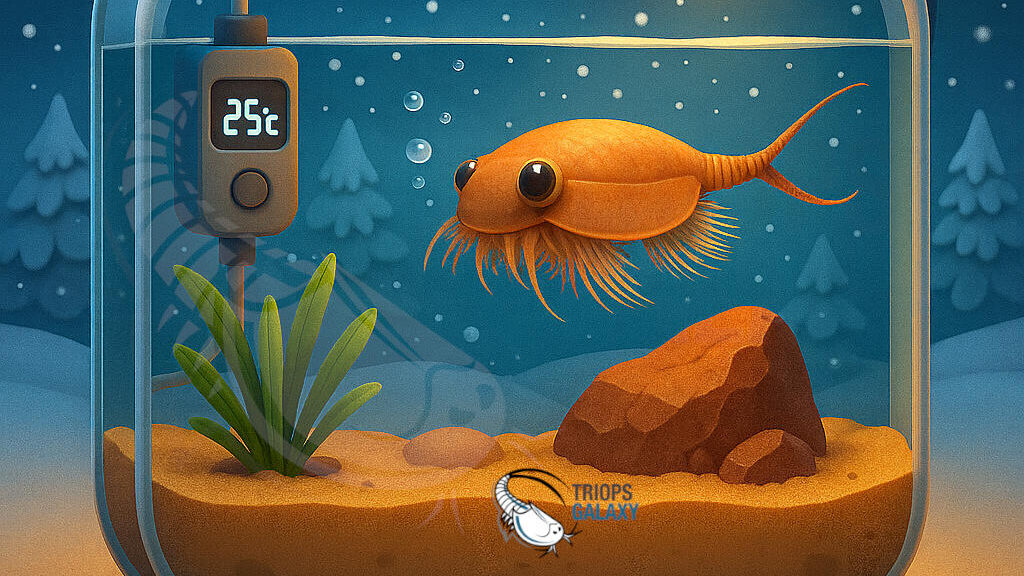
Why breed triops in winter?
At first glance, winter, with its short days and cool temperatures, does not necessarily seem like the ideal season for breeding triops. However, there are many advantages to doing so:
- Stable room temperatures: Less ventilation in winter means that water values remain constant.
- Smaller temperature fluctuations: Summer heat peaks are eliminated, reducing stress for triops.
- Better control over light and heat: you decide how bright and warm it is in the aquarium.
- More time for hobbies: The dark season invites you to spend more time indoors and start projects such as breeding triops.
The optimum temperature as a decisive factor for success
Triops require a stable and warm environment for healthy development. It is particularly important to carefully control the temperature in winter, because if it falls below the ideal range, the hatchlings may not emerge or the young animals may develop only to a limited extent. Depending on the species, triops prefer temperatures between approximately 20 and 28 degrees Celsius. While Triops cancriformis tolerates slightly cooler temperatures, species such as Triops longicaudatus usually require higher, constant warmth. This can be reliably achieved with a heating mat or an aquarium heater. As the water is less subject to fluctuations in winter, the temperature can be kept particularly stable, which is very beneficial for the triops.
Light in winter: artificial lighting becomes indispensable
With shorter days and weaker sunlight, natural daylight in winter is usually not sufficient to provide triops with enough light. An artificial light source becomes an important part of breeding. It ensures that the triops receive at least twelve hours of light per day and at the same time supports the formation of biofilms, which are an essential food source for the newly hatched animals in the first few days. LED lamps or aquarium lights are particularly suitable here, as they produce bright but cool light and are easy to control. Many breeders also use a timer to achieve a constant day-night ratio.
Water quality and location: two factors that are often underestimated in winter
During the cold season, the indoor climate changes significantly due to heated air. Dry air causes water in the aquarium to evaporate more quickly, thereby increasing the concentration of minerals. To compensate for this, the water should be checked regularly and topped up with soft water if necessary. The right location is also particularly important. Window sills and exterior walls can cool down significantly at night and cause temperature fluctuations that stress the triops. A warm, draught-free and well-lit place in the room therefore offers much better conditions. A stable surface that provides sufficient support for the heating mat and aquarium also contributes to safe operation.
Feeding in winter: patience and sensitivity ensure healthy animals
Triops develop somewhat more slowly in winter, which also affects their feeding. Since the young animals are more sluggish at lower temperatures and the biofilm does not grow as quickly, the first feeding with very fine micro food should only take place after a few days. Spirulina powder or special triops dust food are ideal for feeding the tiny animals in the early stages of life. As soon as the triops grow, their diet can be gradually switched to artemia nauplii, micro worms or triops pellets. It is particularly important to feed sparingly in winter to avoid overloading the water. Less is often more here, as clear water conditions contribute significantly to the health of the triops.
Many breeders observe that triops appear to be somewhat calmer and more stable overall in winter. Due to the lower water temperatures, they develop more slowly, moult less frequently and often display less aggressive behaviour. This reduces cannibalism, and some animals even achieve a longer lifespan. This more leisurely development makes breeding in winter particularly interesting, as it allows for more intensive observation and is often more harmonious than in the very warm summer months.
Common mistakes when breeding triops in winter
Despite the many advantages, there are a few mistakes that can easily be made in winter. Temperatures that are too low in the first few days of rearing often lead to a failure to hatch. An unfavourable location, such as directly by a window or on a cold exterior wall, can also have a negative impact on development. Similarly, too little light can be a reason why the triops are not sufficiently active in the first few days and the biofilm does not develop properly. Regularly checking the temperature and light and keeping an eye on the technology will create ideal conditions for stable breeding.
Breeding triops in winter – Conclusion
Breeding triops in winter is not a difficult undertaking, but rather an exciting alternative to the summer months. With a little preparation, a stable temperature, sufficient lighting and a suitable location, you can create the perfect conditions. Many breeders achieve particularly good results during the cold season because water values and temperatures fluctuate less and the animals often develop more robustly. If you are looking for a fascinating winter project or want to continue breeding triops during the dark months, this hobby is an ideal activity that enriches everyday life and at the same time offers a glimpse into prehistoric times.

- ❗️PPWR: No deliveries to the EU or Switzerland for the time being ❌ - 17. August 2026
- Rare sighting in the north: a beluga whale appears to be swimming in the Flensburg Fjord - 14. April 2026
- Palaeontology: Horned dinosaurs were there, but misidentified - 9. January 2026
