



 Triops Longicaudatus
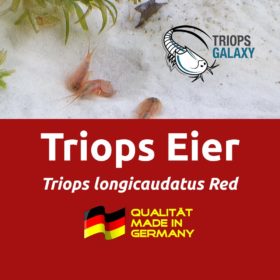 Triops Longicaudatus Red
 Triops Longicaudatus
 Triops Longicaudatus Red
 Triops food
 Sea almond leaf
 Aquarium filter
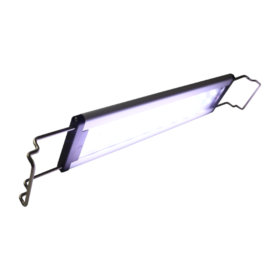 Lighting
 Substrate
 Decoration
 Heating
 Cleaning
 Thermometer
Guide
The goldfish: an underrated classic in aquatics
Hardly any other fish is as deeply rooted in our collective memory as the goldfish. It is considered the quintessential aquarium fish, is often given as a gift, kept in small tanks or mistakenly regarded as undemanding. In reality, the goldfish is an extremely robust, intelligent and long-lived carp fish with an amazing history and clear requirements in terms of husbandry and care. Anyone who is seriously interested in goldfish or even considering breeding them should be fully aware of their biological and ecological needs. In this blog article, I describe the amazing nature of the goldfish.
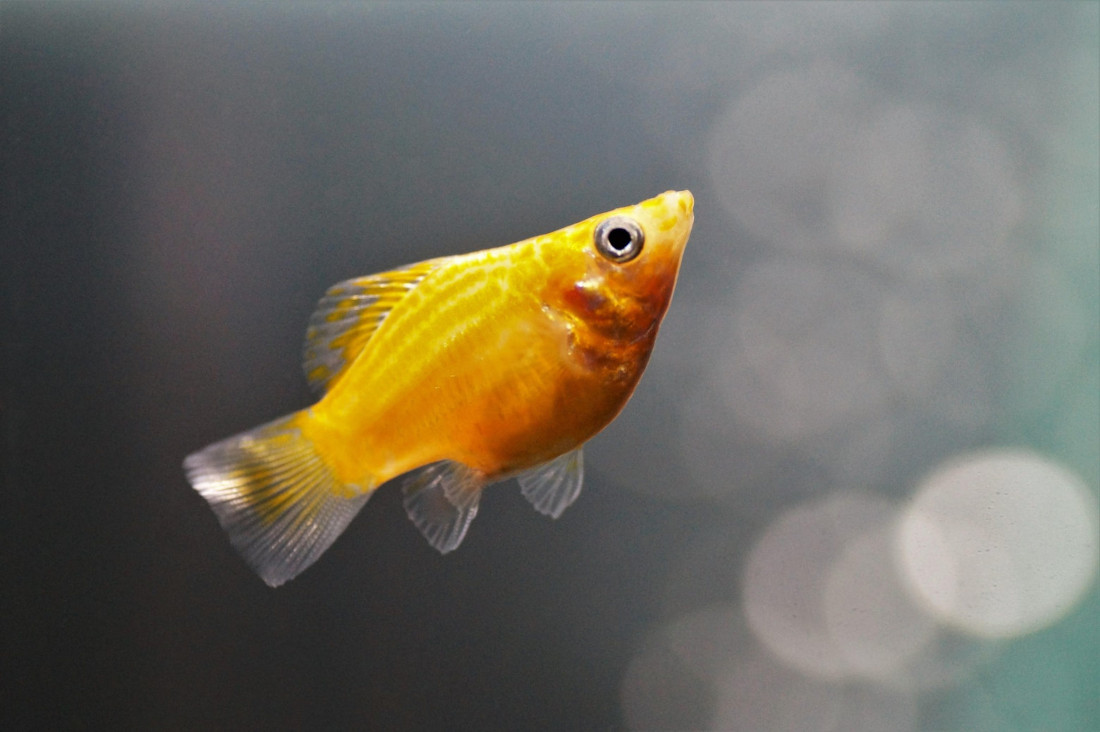
From wild fish to domesticated animal: the origins of the goldfish
The goldfish, whose scientific name is Carassius auratus, originates from East Asia. Its ancestors lived in slow-flowing waters, lakes and floodplains in China. Over a thousand years ago, humans began to selectively breed individual colour mutations. Golden and reddish colours were considered particularly valuable and were initially kept in temple complexes and later in private ponds.
Over the centuries, the goldfish became one of the first domesticated fish. The species spread worldwide via Japan and eventually Europe. Today, there are numerous breeds, some of which differ significantly from the original wild form. Despite all the breeding variations, the goldfish is still a close relative of the native crucian carp and thus a true carp fish from a biological point of view.
Size, life expectancy and astonishing anatomy
A widespread myth claims that goldfish remain small and adapt to the size of their aquarium. In fact, the opposite is true. Goldfish can reach considerable sizes when kept in a species-appropriate manner. In aquariums, they often grow to between 20 and 30 centimetres in length, and even larger in garden ponds. Their growth depends on genetic factors, water quality, nutrition and, above all, the amount of space available.
Their life expectancy is also often underestimated. Goldfish can easily live for ten to twenty years, and in some cases even significantly longer. Historically documented specimens have reached an age of over 40 years. Anyone who decides to keep goldfish is therefore choosing a long-term pet.
Anatomically, goldfish have some special features. They do not have a stomach, but a continuous digestive tract. Food is therefore processed continuously, which explains why goldfish eat frequently and produce a comparatively large amount of excrement. Their teeth are not located in their mouths, but in their throats as so-called pharyngeal teeth. They also have an excellent sense of smell and taste and are more capable of learning than is often believed.
Not all goldfish are the same: breeds and differences
Numerous varieties have been developed over the course of breeding history. A basic distinction is made between slender, natural forms and highly bred varieties. Elongated varieties such as the Comet or Shubunkin are strong swimmers and are particularly well suited to large aquariums or ponds. Highly bred varieties such as veil tails, orandas or telescope eyes are characterised by special body shapes, long fins or altered eyes, but are usually more sensitive.
It is important for breeders to know that highly bred varieties require more care. They swim more slowly, are more susceptible to disease and should not be kept with very active or competitive conspecifics.
The right aquarium: space, structure and technology
A species-appropriate aquarium is the basis for healthy goldfish. Contrary to popular belief, small tanks are completely unsuitable. For two goldfish, an aquarium should hold at least 200 litres, with additional volume for further animals. Sufficient tank length is more important than height, as goldfish are active swimmers.
When setting up the aquarium, attention should be paid to functionality and safety. Goldfish like to dig in the substrate, which is why fine, rounded gravel or sand is ideal. Sharp-edged decorations can cause injuries and should be avoided. Plants should be robust, as many species of goldfish will nibble or dig them up. Resistant plants such as Anubias or Java fern have proven particularly suitable.
Technically, a powerful filter system is essential. Goldfish produce a lot of organic waste due to their metabolism, which is why a generously sized external filter is recommended. Regular partial water changes also ensure stable water values and healthy fish.
Water values, temperature and care
Goldfish prefer cooler water and are not considered classic tropical fish. Temperatures between 18 and 22 degrees Celsius are ideal, although they can tolerate lower temperatures for short periods. The pH value should be neutral to slightly alkaline, while clean, oxygen-rich water is particularly important.
Consistent care with regular water changes is crucial. Neglected water quality is one of the most common causes of disease and growth disorders in goldfish.
Nutrition: Species-appropriate and balanced
Goldfish are omnivores with a strong preference for plant-based food. High-quality specialised feed should form the basis of their diet, supplemented with plant-based ingredients such as spirulina or steamed vegetables. Frozen and live food can be given occasionally, but should be used in moderation.
As goldfish do not have a stomach, it is advisable to spread several small feedings throughout the day. Overfeeding not only stresses the fish, but also significantly affects the water quality.
Breeding goldfish: patience and experience required
Breeding goldfish is possible in principle, but requires experience, space and time. During the spawning season, males develop typical spawning rashes and the animals display pronounced courtship behaviour. The eggs are laid on plants or special spawning aids and must be protected from the parent fish, as they would eat their own spawn.
Rearing the young fish is challenging. In addition to suitable initial food, consistent selection is necessary, especially in high-yield breeding, in order to raise healthy and species-appropriate animals.
Conclusion – A fish with responsibility
The goldfish is much more than just a decorative aquarium inhabitant. It is a long-lived, social and intelligent animal with clear needs. Those who provide it with sufficient space, clean water and a balanced diet will be rewarded with fascinating behaviour and decades of companionship. For both prospective owners and breeders, the goldfish is not a beginner’s mistake, but a classic that deserves respect and responsibility.

- A merry and peaceful Christmas! 🎄 🌲 ❄️ - 24. December 2025
- The goldfish: an underrated classic in aquatics - 21. December 2025
- We are on holiday until 7 January 2026! Have a relaxing and peaceful Christmas! 🎄 ☃️ - 20. December 2025
